Why Is My Roof Leaking Around the Chimney
A roof leaking around the chimney is often caused by damaged flashing, cracked crown, or failed mortar. Learn how to find the source and when to call a pro.




Based on 500+ Reviews

Proudly American
Owned & Operated

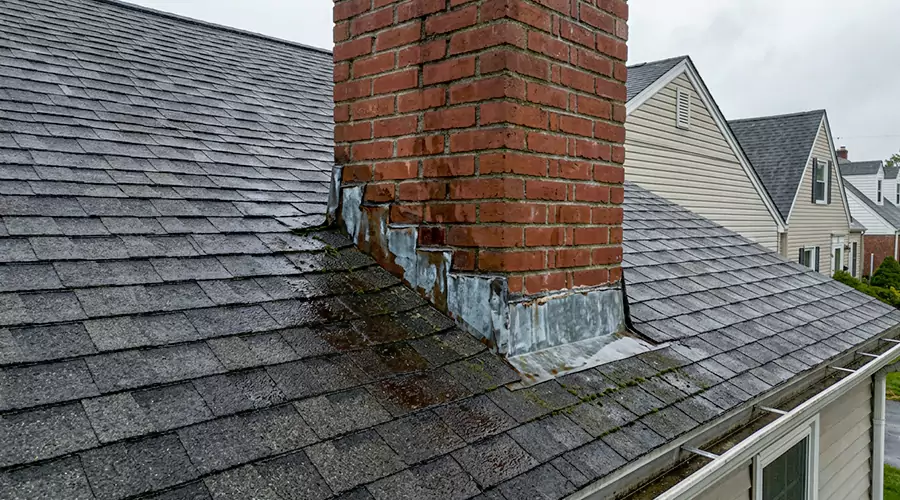
A roof leaking around the chimney is most often caused by a failure where the chimney passes through the roof. Damaged flashing, cracked sealant, deteriorated mortar, a damaged crown, or nearby roofing defects can all let rainwater enter. Water can travel before it appears indoors, so the visible stain may not be directly below the opening.
A chimney interrupts the roofing system. The roof and masonry expand and contract differently, which can loosen metal, open mortar joints, or separate old sealants. A proper flashing system uses overlapping layers to move water onto the shingles. Step flashing runs along the chimney sides, while counterflashing overlaps it from above.
Flashing is one of the first places to check when water appears near a chimney. Rust, lifted metal, open joints, or poor installation can create a direct path beneath the roofing. A roof leak at chimney flashing may become more noticeable during wind-driven rain because water is pushed into gaps that stay dry during lighter storms.
Sealant around flashing joints does not last forever. Sunlight and temperature changes can make old material brittle or cause it to pull away from masonry. Adding new caulk over failing flashing may hide the problem temporarily without restoring the drainage system.
The crown is the sloped masonry surface at the top of the chimney. Cracks can allow water into the brickwork, and that moisture may travel downward until it appears near the roofline. Crown damage can therefore look like a flashing leak even when the entry point is higher.
Open mortar joints can absorb and transmit rainwater. Spalled bricks can also hold more moisture than sound masonry. Deteriorated joints create openings that allow moisture deeper into the chimney structure.
A missing cap can allow rain to fall directly into the flue. This often causes moisture inside the chimney or fireplace. A damaged cap can also allow debris or animals into the flue.
Not every leak near a chimney starts with the chimney itself. Damaged shingles, underlayment, or poor drainage on the uphill side can direct water toward the chimney joint. Wide chimneys may use a cricket or saddle on the uphill side to divert water around the structure. A missing or damaged cricket can allow water to collect behind the chimney.
Note when the leak appears. Wind-driven rain often points toward flashing or an exposed roof joint, while prolonged rain may also involve saturated masonry.
| What You Notice | Possible Cause | What to Check |
|---|---|---|
| Ceiling stain beside chimney | Flashing failure | Metal joints and shingles |
| Water inside firebox | Cap or crown problem | Chimney top |
| Damp upper brickwork | Crown or mortar damage | Crown and joints |
| Leak mainly in heavy wind | Open flashing joint | Step and counterflashing |
| Water behind chimney | Drainage problem | Cricket and roofing |
Water can travel before becoming visible, so these clues help narrow the source but do not prove it. Moisture may move along decking, framing, insulation, or other building materials before reaching the ceiling.
Begin indoors. If the attic is safely accessible, check after rain for damp insulation, dark decking, water tracks, or stains near the chimney.
From the ground, use binoculars or a zoom camera to look for:
Compare what you see after different types of rainfall. This can help determine whether the problem occurs only during wind-driven rain or whenever the roof becomes wet. Do not climb onto a steep or wet roof simply to find the source.
The repair depends on the actual entry point. A loose flashing edge may need proper reattachment and resealing. Corroded or incorrectly layered metal may require complete replacement. To fix leak around chimney flashing correctly, the metal layers must direct water over the roofing rather than rely only on surface caulk. Proper chimney flashing uses step flashing with overlapping counterflashing to create this drainage path. Cracked mortar may require repointing. A damaged crown may need sealing, patching, or rebuilding depending on the damage.
Missing caps should be replaced with a properly sized unit. Damaged shingles or underlayment beside the chimney must be repaired as part of the roof system. If several defects exist at the same time, correcting only one visible opening may allow the leak to return.
A roof chimney leak should be investigated promptly because repeated moisture can damage roof decking, insulation, ceilings, and masonry.
Act quickly when you notice:
Persistent moisture can remain hidden long after the visible dripping stops. Move belongings away from active drips if it is safe to do so. Do not attempt roof repairs during rain.
Professional inspection makes sense when the source cannot be identified safely or the repair requires roof or masonry work.
Consider professional evaluation when:
Repeated patching is particularly important to investigate. Surface sealant cannot correct improperly layered flashing or substantial masonry failure.
Inspect the chimney-to-roof joint from the ground after severe storms, especially for lifted metal or missing roofing material. Keep the crown, cap, and mortar in good condition. Clear debris from the uphill side of the chimney so water can drain freely. Check interior ceilings periodically for new discoloration. Early stains are easier to investigate before moisture damages a larger area.
Avoid relying on repeated layers of roofing tar as routine maintenance. A durable repair should correct how water moves around the chimney instead of only covering a visible gap.
A roof leaking around the chimney usually points to failed flashing, damaged masonry, a cracked crown, or a nearby roofing defect. The best way to solve it is to identify the true entry point before applying sealant or replacing parts. Check the attic after rain, inspect visible chimney components from the ground, and address recurring water entry before hidden damage spreads.
Yes. Failed step flashing or counterflashing can allow water beneath the roofing where the chimney passes through the roof.
Yes. Water can enter through crown cracks and move downward through masonry before appearing near the roofline.
Wind-driven rain can enter gaps that lighter rain does not reach. Heavy rainfall can also expose poor drainage behind the chimney.
Caulk may help with a small sealant failure, but it will not correct corroded or improperly installed flashing.
The crown, cap, mortar joints, masonry, or nearby roofing may be the actual source.
Repeated leaks after surface patching can indicate that the flashing system needs proper replacement instead of another temporary seal.
A roof leaking around the chimney is often caused by damaged flashing, cracked crown, or failed mortar. Learn how to find the source and when to call a pro.
